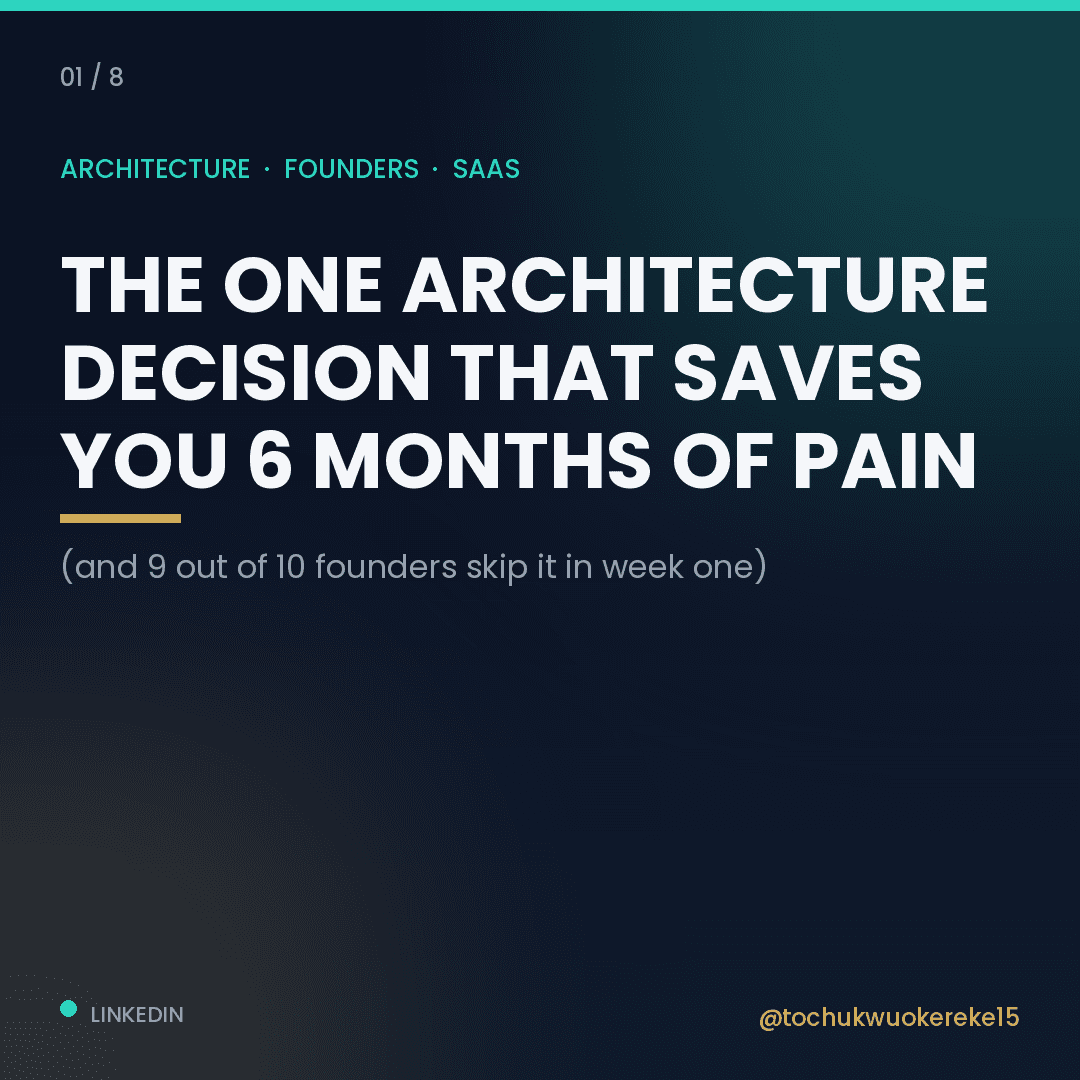
Architectural Decision That Saves Future Pain
Design for multi-tenancy from commit
I rebuilt a client's SaaS at 2am for the third week straight —because of one decision made in week one. Not a bug. Not bad code. An architecture choice nobody thought twice about. The problem: When you're moving fast, "one codebase per customer" feels efficient. It works for customer #1, #2, #3. Then customer #5 signs up, and you're maintaining five slightly-different versions of the same product. Every fix has to be repeated five times. Every feature ships five times slower.
What actually happened: A support-automation product started with custom deploys per client. By client #9, the founder's small team was drowning new features took 3x longer, bugs multiplied, and burnout set in. Month 7: a full rebuild into a single multi-tenant system. Six months lost that never had to be. This isn't rare. Stripe's Developer Coefficient study found developers lose 42% of their work week to technical debt and bad code and McKinsey reports 30% of CIOs say over a fifth of their tech budget gets diverted to debt before a single new feature ships.
The lesson: Design for multi-tenancy from commit #1. One codebase. One schema. Every table scoped by tenant. New customer = a new row in your database, not a new deploy on your server. You build the boundary once before you need it and every customer after that is nearly free to onboard. Architecture debt doesn't announce itself. It just quietly raises the price of everything you build next. The founders who win aren't the ones who move fastest in week one. They're the ones who make the one decision in week one that lets them keep moving fast in month twelve. Swipe through the carousel for the full breakdown. Building a SaaS right now? Tell me your stack in the comments happy to take a look.
Related posts
Why WhatsApp alerts beat email for Nigerian SME Engagement
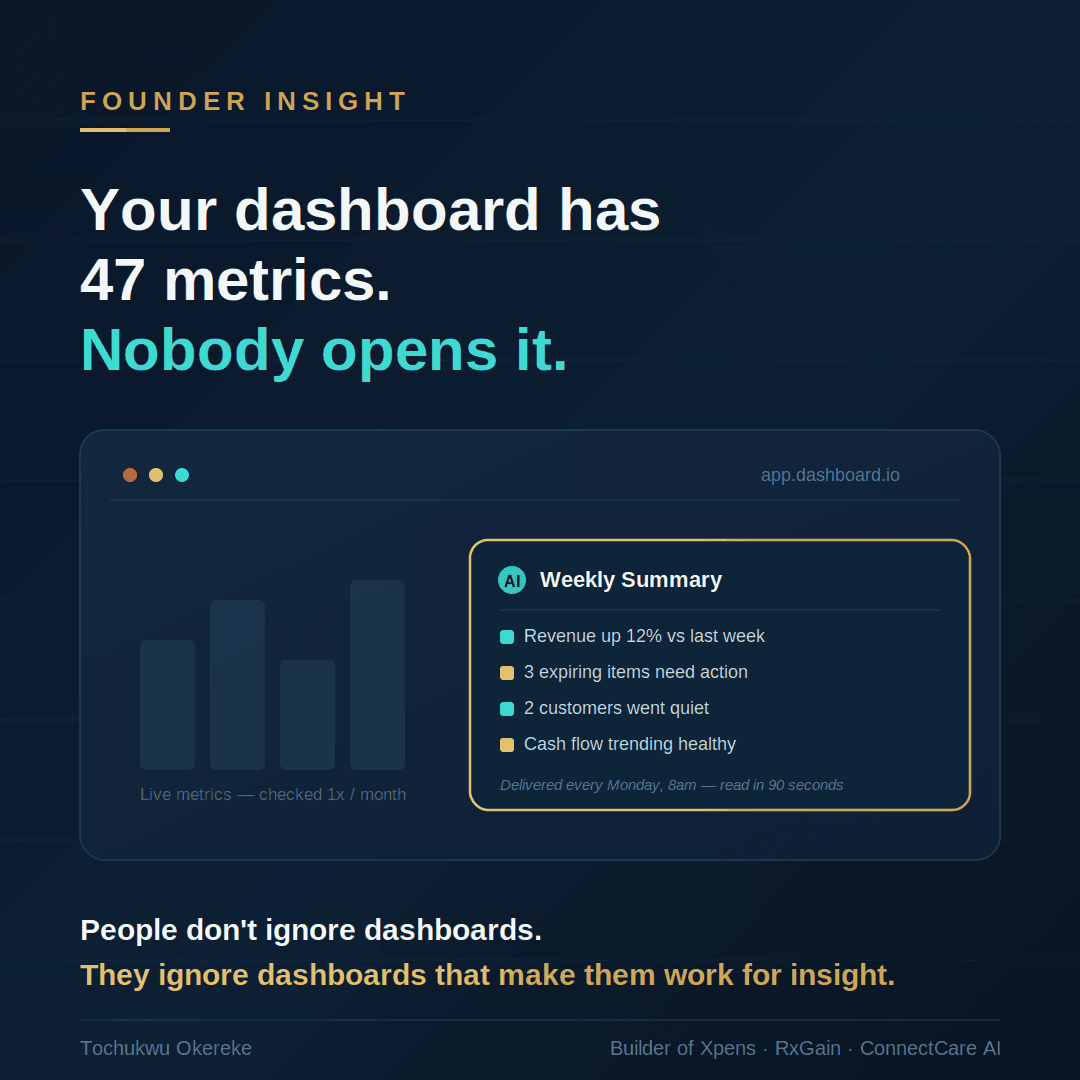
Every Monday at 8am, users get an AI-generated weekly summary pushed to them, not waiting to be pulled
Business Automation
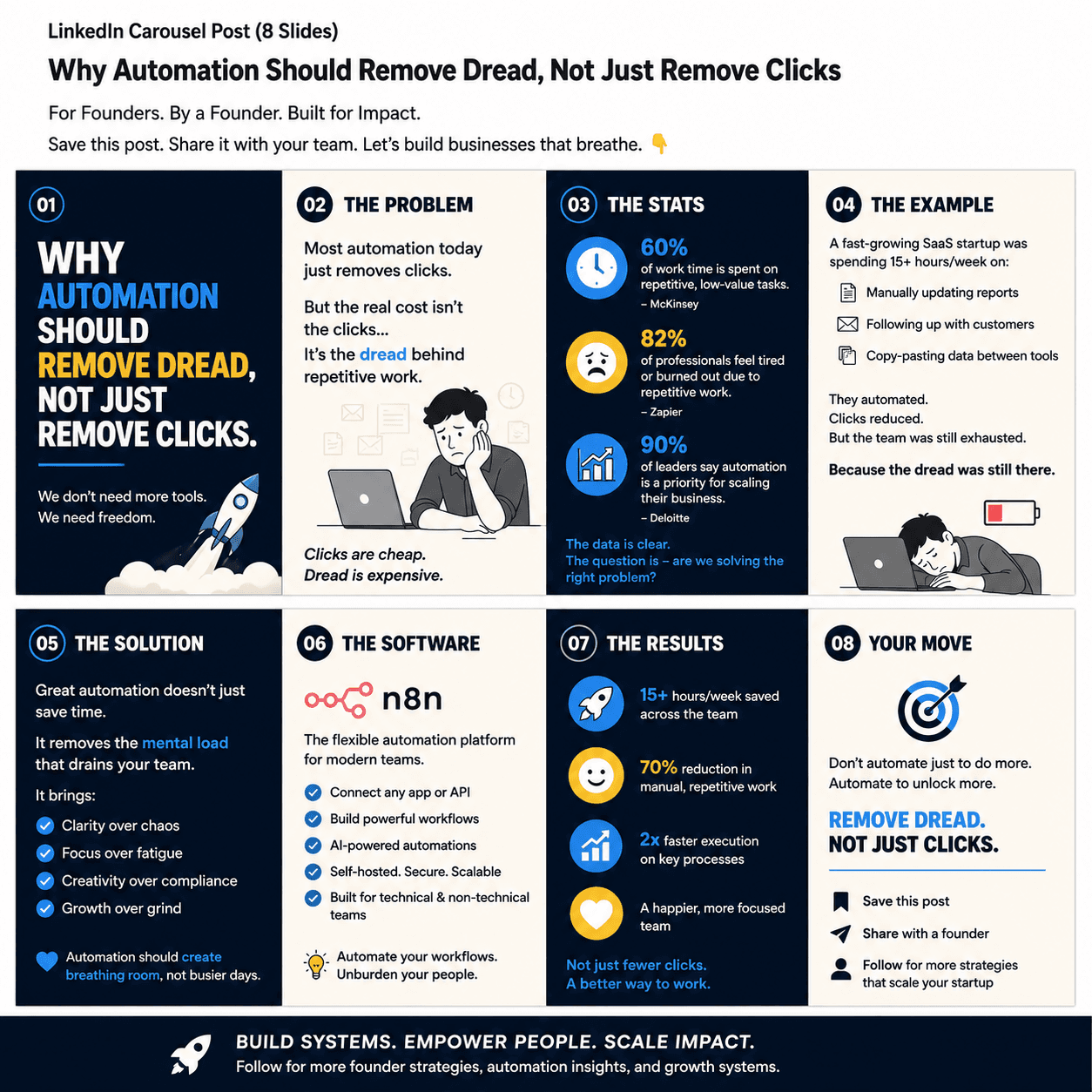
Good automation saves time
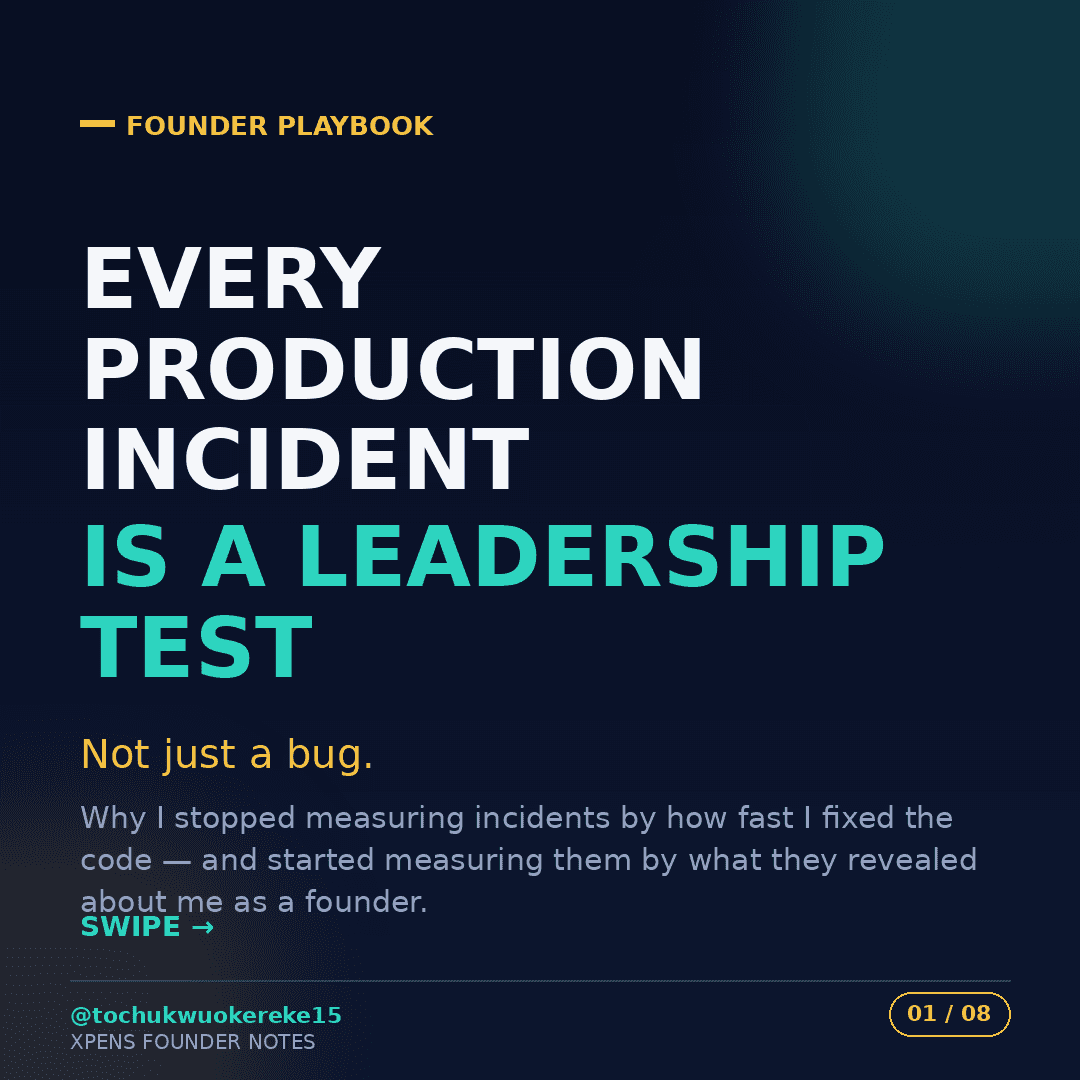
Why I Treat Every Production Incident As A Leadership Test, Not Just A Bug
we're trained to treat incidents as engineering events